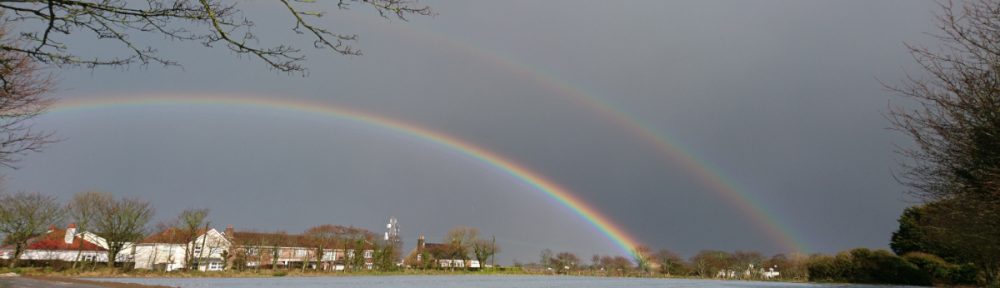
It would be fair to say that whereas astronomy is an observational science, cosmology uses those observations to model the Universe. With this distinction in mind, there are a number of forthcoming events and publications that I think are worth highlighting. First and foremost is next week’s (April 8th) total solar eclipse, which will be … Continue reading Astronomy and Cosmology
Blog Feed
The Hertzsprung-Russell diagram
It is obvious that the stars in the night sky differ from one another; some look brighter, some appear larger and some have different colours. One of the earliest ideas was that all stars are the same but they look different because they are at different stages of development: it’s as simple as the fact … Continue reading The Hertzsprung-Russell diagram
Discharge and Fluorescent lighting
The earliest ways of generating light all involved heat, whether that meant setting a fire, burning a pitch torch, lighting a wax candle or heating a mantle using a gas flame. When electricity arrived, thoughts turned from creating light by chemical means to the possibility of using an electric current. Initial approaches still involved the … Continue reading Discharge and Fluorescent lighting
Hideki Yukawa and Meson Theory
How does the nucleus of an atom stay together? Why don’t the positively-charged protons repel each other and cause the nucleus to disintegrate? The early models of the atom imagined solid spheres, perhaps with different sizes, shapes or “colours” distinguishing one type of atom from another. Then came J J Thomson’s discovery of the electron … Continue reading Hideki Yukawa and Meson Theory
Experimental Errors (part 2)
The previous post (Experimental Errors, https://physbang.com/2023/11/12/experimental-errors/) ended with an invitation to "consider whether there are any other, previously unidentified, sources of uncertainty" in the method used to derive the specific heat capacity of an iron block. As it happens, there are (at least) three possibilities that weren't covered in the original article. Firstly, there is … Continue reading Experimental Errors (part 2)
Experimental errors
Experiments are often used to confirm (or, more usefully, refute) particular ideas but their impact is limited by measurement errors that can compromise the results. The obvious answer is to reduce the uncertainties as much as possible but what do you do if this causes the result to move further away from the expected value? … Continue reading Experimental errors
Electron deflection tube
It is common to think of the electron deflection tube as a device that demonstrates the behaviour of electrons within an electric field but in fact there are two electric fields at work. The first field accelerates electrons that are released by a heated coil then the second field deflects those electrons as they travel … Continue reading Electron deflection tube
Electric Field & Electric Potential
It is tempting to regard the equations for electric fields and electric potentials as being separate things but they are so closely related that they are best viewed as different sides of the same coin. This is because electric field strength is the same as potential gradient. Or to put it another way, the electric … Continue reading Electric Field & Electric Potential
Radiation and Altitude
The discovery of radioactive rocks was unexpected but when physicists attempted to discover how far the new “penetrating rays” could reach, they were in for an even bigger surprise. Henri Becquerel’s discovery that uranium salts emit penetrating radiation was one of science’s great “accidents”. Uranium was first identified in 1789 but it was a century … Continue reading Radiation and Altitude
Paper vs Plastic Straws
The one fundamental fact that links all discussions about trying to do the best for planet Earth is things are rarely as simple as we would wish. This warning applies not only to discussions but also, more seriously, to actions as well. An initiative that is being rolled-out in the UK and many other countries … Continue reading Paper vs Plastic Straws
 Mr Tarrant's physbang 'blog