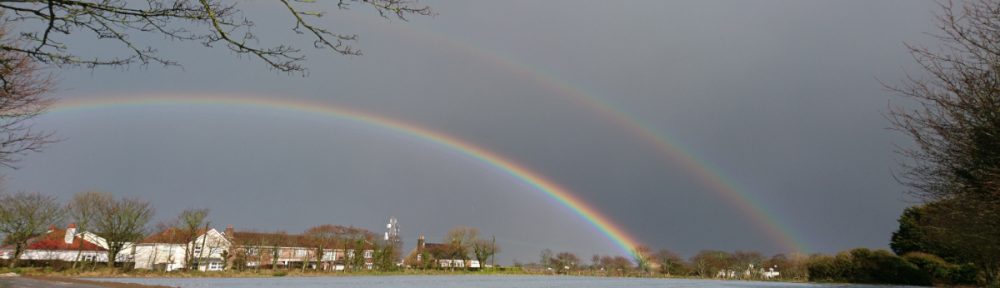
When an object moves through the air, the noise it creates spreads out in all directions, moving away in waves that travel at the speed of sound. But what happens when the object is moving faster than the speed of sound? In this case, the sound waves that are trying to move ahead get overtaken … Continue reading Sound waves and sonic booms
Y9 Motion Test – feedback
The tests have been marked and the scores are in – but they don’t really matter. Obviously you care about how well you did (and rightly so) but what really matters is what you go on to learn after doing this test. In other words, there is always room for improvement. The purpose of this … Continue reading Y9 Motion Test – feedback
Acceleration
Acceleration is the rate of change of velocity. It is calculated by finding the change in velocity and dividing that number by the time taken for the change to occur, as shown in the word equation below; acceleration = (final velocity - initial velocity) / time taken This can be written in symbols using either … Continue reading Acceleration
Waves: note-taking task
One of the most important study skills is note-taking. Some students complain that they do too much writing so in the Waves topic we'll be trying out a different approach based on Cornell Notes. The method was covered in class but I've included a screen-grab here to remind you what it looks like - but … Continue reading Waves: note-taking task
All about Springs
The facts and understanding that you need to have about springs is less detailed than it is for some other GCSE Physics courses. It is therefore important to use learning resources that are matched to this particular course. If you start reading about ultimate tensile stress, for example, then you are learning too much! The … Continue reading All about Springs
Delta and the Power of Change
In physics, one of the big differences between KS3 and KS4 is the idea of “change”. KS3 students are happy to talk about speed being distance divided by time but at GCSE level you need to be thinking instead about speed being a rate of change of distance. Why is this important? Because physics calculations … Continue reading Delta and the Power of Change
Astronomy in a Nutshell
There are no equations in our Astronomy module - just a bundle of facts, models and theories. To make learning (and revising) easier, the knowledge that you need can be linked into seven pairs of ideas as listed below; 1. Models of the Universe: Geocentric versus Heliocentric 2. Observing the Universe: Naked Eye versus Using … Continue reading Astronomy in a Nutshell
How did the Universe begin?
As was the case when we considered models of how the Universe is structured, when it comes to explaining the beginning of the Universe you again need to know about two competing ideas. You also need to know about the evidence that either supports or questions each theory. One theory is the Steady State Theory. … Continue reading How did the Universe begin?
Online Astronomy Resources
There are many great resources available online to support your learning in the astronomy module of the course. In this post, which I'll update as we go along, I'm going to list a few of my personal favourites, some of which link directly to the required course content but others are included as a way … Continue reading Online Astronomy Resources
Energy Sources
You must be able to describe and compare the Earth's major energy sources that are used for generating electricity. To help you structure clear answers to exam questions of this type I suggest that you use the SLAP! approach. SLAP! is my acronym to help you to remember the things you should think about when … Continue reading Energy Sources

