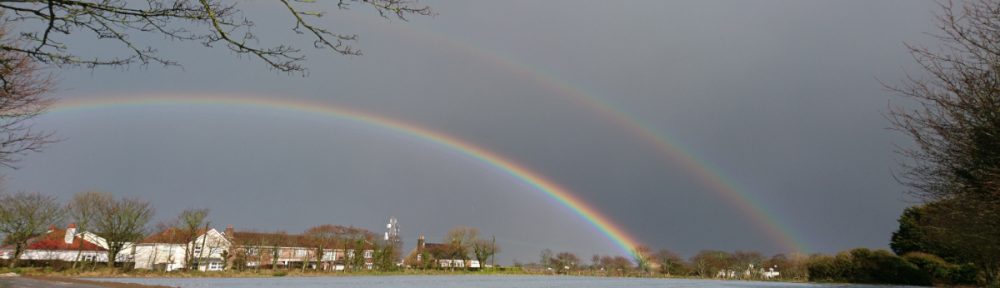
Although human vision relies on visible light, we can't actually see light itself. Physicists have therefore modelled the behaviour of light using waves that can be seen, especially water waves. In the lab, we would be able to observe this using a ripple tank but you can currently experience this experiment from home using resources … Continue reading Observing Waves
EMS Short Study Course
NASA has created an excellent self-contained short study course that covers the electromagnetic spectrum (EMS) from an astronomy perspective. This resource therefore has double value for GCSE Physics as it supports learning across the topics of both waves and space. The course comprises four introductory sections, eight units on parts of the electromagnetic spectrum and … Continue reading EMS Short Study Course
Try This At Home (IoP)
You could be studying physics every day but it would be better to have some down time! So here are some ideas for experiments that you can do at home when you are taking a break from your studies. These things aren't rocket science; they're about waves, forces and the shape of space (actually a … Continue reading Try This At Home (IoP)
Future Impossible
Bell Labs has created a fantastic series of four short videos that I highly recommend. Coming from a team that is now part of Nokia, these videos focus on leading-edge information communication technologies but they do this in an extremely accessible way that shows the parts played by physicists in bringing industrial visions to life. … Continue reading Future Impossible
Using the EMS to Observe Earth
When we look down on the Earth from an aircraft, we are observing the surface of the planet using visible light in a qualitative way - which means that we are simply sensing (seeing) rather than measuring the amount of light reflected. By using instrumentation, we can extract much more meaning from our observations by … Continue reading Using the EMS to Observe Earth
Uses and Dangers of EM Waves
Electromagnetic (EM) waves are all similar; they are all transverse waves that travel at the same velocity and are created by the movement of electrons. But they are also different, not only in wavelength and frequency but also in how they are reflected, absorbed or transmitted by different materials. For example, the microwaves that your … Continue reading Uses and Dangers of EM Waves
Telescopes in Space
Why do we put telescopes in space? The reason is not to get "closer" to the things we are trying to observe! Although the Earth's atmosphere extends much further, we generally think of space as starting about 100 km above the Earth's surface (see here for more details) and that's a tiny distance compared even … Continue reading Telescopes in Space
The Electromagnetic Spectrum
Given that electromagnetic (EM) waves all have various things in common*, it makes sense to put them in order. We do this using their wavelength or frequency: it doesn't matter which one we choose because as wavelength increases, frequency decreases (and vice versa). Putting the different types of EM waves in order creates a spectrum … Continue reading The Electromagnetic Spectrum
Experimental Physics
At the risk of being controversial, I would like to suggest that experiments are much more powerful than theories because experiments provide the evidence to prove whether or not a theory is correct. Technically, you can't prove that a theory is correct: you can only prove that it works for the particular case that you … Continue reading Experimental Physics
Electromagnetic (EM) Waves
Electromagnetic (EM) waves are a family of different types of waves that have some specific properties in common; they all propagate (travel) at the same speedthey are all transverse wavesthey can all propagate through free space without the need for any medium The most common examples of EM wave are the various colours of visible … Continue reading Electromagnetic (EM) Waves

