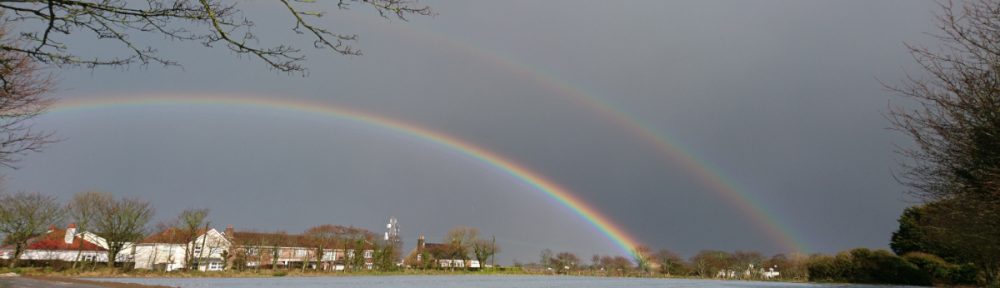
That’s it. This year’s GCSE exams are now over. All that remains is for the papers to be marked and the grades announced. And for me to say thank you to my (final) Y11 class, who got together and bought me a farewell gift, as shown below.
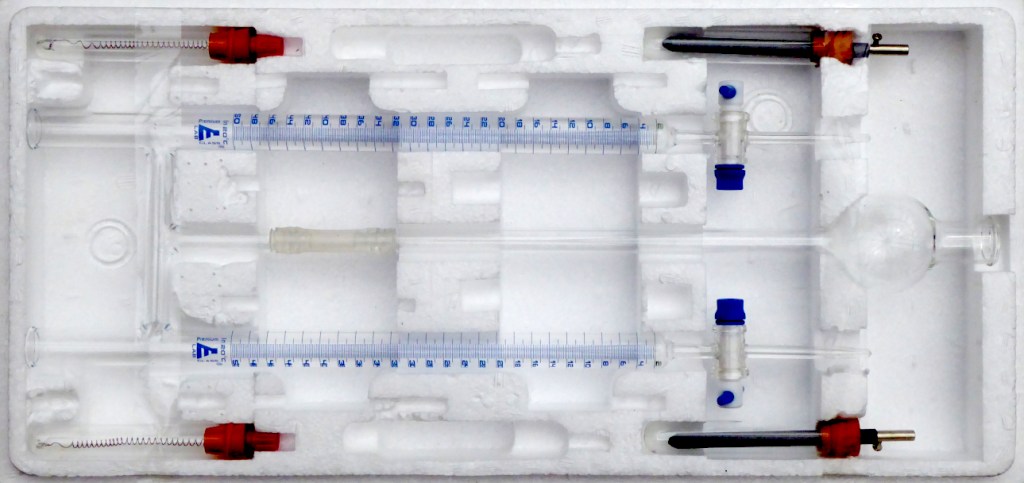
The apparatus was developed by the German chemist August Wilhelm von Hofmann, who was famed for his work on synthetic dyes. When assembled, the equipment uses electrolysis to liberate oxygen and hydrogen from (ionised) water. The volume ratio of the two gases produced indicates the chemical (stoichiometric) composition of water, which we now take for granted as H2O. It’s a demonstration that I have always loved doing!
The apparatus can also be used as an electricity meter since the actual volumes of gases produced relate directly to the amount of charge transferred, which is equal to the product of the (average) current and the time for which it has flowed. The apparatus subsequently became known as Hofmann’s voltameter on account of its use in electrical measurement.
I am extremely grateful to my last ever Y11 class, whose thoughts and actions in sourcing this lovely gift have touched me deeply.
Metrology (the science of how we measure things) is another love of mine, and this gift not only blends physics with chemistry but is also a superb tribute to the ingenuity of those who have advanced the history of scientific measurements.
Lord Kelvin (whose name is used for the unit absolute temperature) is often said to have commented, “if you cannot measure it then it is not science,” but in fact there was a bit more to his words than this brief summary so I’ll leave you with the quote in full;
When you can measure what you are speaking about, and express it in numbers, you know something about it; but when you cannot measure it, when you cannot express it in numbers, your knowledge is of a meagre and unsatisfactory kind: it may be the beginning of knowledge, but you have scarcely, in your thoughts, advanced to the stage of science.
Oxford Essential Quotations

 Mr Tarrant's physbang 'blog