I previously provided an index of BBC Bitesize links for content that is most likely to appear in this year’s AQA Trilogy Physics Paper 1 exam: I have now created a similar list for content posted on physbang, which you can access via this link. For convenience, you can swap from one index to the other using the tabs that are at the top of each page. I will continue to update the physbang list over the next few days so make sure that you check on it regularly.
These lists are based on the advanced information provided by AQA but they are only my best guess at what will be in the exam. I have excluded things that AQA say will not be assessed but that still leaves a lot of content. Although the exam board has also said what will be the main focus in each topic, there could easily be other things included so you will need to revise more than the bare minimum. I have prioritsed the two required practicals that are listed in the advanced information, which you should also revise using the course Lab Book (review the experiments AND answer the exam-style questions).
If you feel that exams are “stressing you out” then remember that there is a difference between positive stress and negative stress.
Positive stress is manageable and provides the motivation you need to revise and work hard. You may feel things are getting on top of you but if you are confident enough to take a break then come back and do more revision later, you are probably coping well. If you feel you can’t take a break because there is too much to do, you are wrong! Taking a break will help you to revise better.
Negative stress is when motivation turns to anxiety. That can happen either because the mountain of revision seems too high to climb or because you’ve been revising too intensely and you’re approaching burn-out. If it seems like there is too much to do then break things into smaller chucks: that’s what I’ve tried to do for you in the index pages I’ve created. To avoid reaching burn-out, take a break and do something different for an afternoon. Or spend a day on the beach with friends who have also decided to take time out from revision. But only one day!
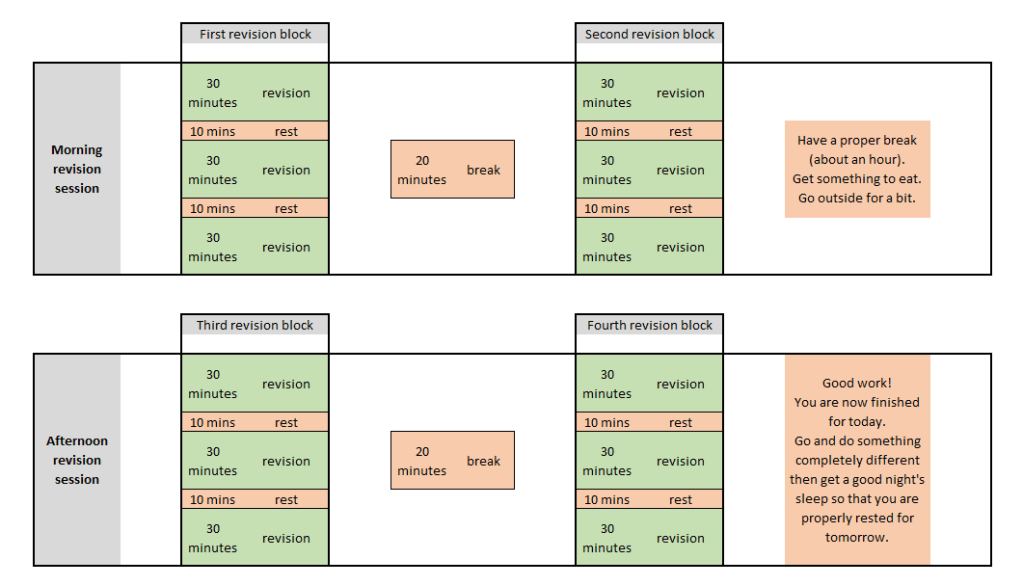
There is a useful guideline for routine revision: do 30 minutes of study then take a 10 minute break. Make it a proper break. Stand up. Move around. Get a drink. Maybe message friends to see how they are (it’s good to support each other). Then after three revision sessions like this, break for 20 minutes. Repeat this process then take a full one-hour break. If you need a bit longer, that will be fine but don’t go beyond an extra half-hour unless there is a really good reason. You can go through this sequence twice a day, giving you six hours of revision spread over a total time of nine hours, as shown below.
If you like the idea of an app that will do the timings for you, here are suggestions for several that you can use. The timings may not quite match my suggestions but they are all based on the same approach.
Finally, I’ve often found that sleep helps me to think things through. I don’t mean that I wake up with a radical scientific break-through but rather that I sometimes have another idea about how to do something that’s been puzzling me. If you want to try that, make sure you are getting plenty of restful sleep and you have several days in hand before the exam. If you still “don’t get it” then email me for help: mrtarrant (usual symbol) cantab.net.

 Mr Tarrant's physbang 'blog